February 13, 2014

Finding Your Love Language

heart of artWhy is your love language so important?

Because once you know your love language, your friends and family will know how to better relate to you and share their love.

So what are the love languages?

Meaningful Touch / Affection: Some women give and receive love through the language of touch. They want to be hugged, hands held, given love pats, etc. They feel cherished and treasured when they are touched.

Quality Time: The woman who craves quality time wants you to pay attention to her. When she speaks, listen and respond. Spend time doing meaningful things with her. Even helping with the dishes or folding the laundry can become quality time.

Words of Affirmation: Some women need to hear encouraging and affirming words…often. These women appreciate sentimental cards, text messages with “I love you” or “You are my world.” They feel treasured when you take the time to send them a love message with words.

Acts of Service: The Acts of Service woman feels most loved when someone does something for her. Is she dreading the laundry? Do it for her. Does she need her cabinets painted? Make sure that happens. Do something special for her and she will feel loved.

Gifts: The woman who needs to be loved with gifts will appreciate tokens of your admiration. She needs to be surprised with gifts – nothing that she expects for Christmas, birthdays or special days. She likes the gift of one flower when she begins a new project and a full bouquet when she finishes the project. She likes a nugget of chocolate or a piece of jewelry or a new scarf – at unexpected times – just because you love her.

So how will you love the woman in your life this Valentine’s Day?

Discover her particular love language and bless her with touch, time, words, service or a gift. She will love you for knowing her love language and responding in the appropriate way.

2014 GateWay of Hope – The Helping Place for Hurting Women

February 6, 2014

When Choosing SOS Led to Money Management

This blog post is submitted by one of our SOS women, who chooses to remain anonymous.

When my “wasband” left our marriage, so many things changed. 

One change that continues to impact my life is my new financial status, or rather, the feeling of a lack of financial security.

I have met with a financial advisor and participated in several classes including the SOS (Starting  Over Single) group. One of the SOS sessions focused on finances. I was tempted not to go that night because I had free tickets for a concert, featuring a major celebrity. sos

I chose to go to SOS. The concert would be fun for the moment, but my financial future was more important. This decision ended up being the right one.

That evening we learned how “Money manages us rather than us managing our money.”  This statement was true for me.  I had to make a change.

To feel more in control of my money, I track everything I spend daily. Any money out of my hands is recorded, whether it is paid by cash, debit card or credit card. I also record the purpose of the purchase. 

This daily tracking helps me think before I spend.  My challenge is to see how many zero spending days I can gain. Currently I average 3-4 days a week, which becomes money in my bank.

I review my bank account frequently. When I watch my spending, extra money is left in my account after the bills are paid. Then I transfer money into my savings account and/or increase the payment to my credit card.

As my savings grow and my debt is reduced, I feel encouraged to continue this journey of better money management. Now that I have an idea where my money is spent, I can create a budget that I can live with.

When you decide a change is necessary, all the hard work is worth it. No matter what the change might be, if you stick with it, it is possible to change, improve and succeed. 

2014 GateWay of Hope – The Helping Place for Hurting Women

January 30, 2014

Lonely for God

                     What does it mean to be lonely for God? sepia-praying-woman

In our activity-crazed world, we run from one “important” task to the next. Much of what we do as women is expected of us and sometimes, these are tasks we enjoy.

We love making just the right kind of frosting for our child’s birthday cake. We enjoy teaching Bible studies and leading the MOPS group. We find our fulfillment in serving God and others. We pat ourselves on the back at the end of a long day and hope to hear the divine whisper, “Well done, good and faithful servant.”

But then our souls answer back, “But I miss you, Abba Father. I am lonely for you.”

When my son was young, he often brought me drawings that represented his world: horses with really short legs, bugs with really long legs or squiggles that only he could interpret. I always gushed over his drawings, posted them on the fridge and sent copies to the grandmothers. I loved whatever my son drew, and I complimented him on the things he produced each day.

But my favorite time was at night when he climbed on my lap with a book and wanted me to read him a story. His hair smelled fresh of baby shampoo, his body heat warmed my lap, his blue eyes  sparkled with excitement. It didn’t matter which book we chose or how many times we read the same book.

What mattered was our time together – our closeness and the love of story that we shared. That together time filled a place inside each of us.

That’s what happens when we address our loneliness for God. Sure, he is proud of all the things we do and he’s glad for each avenue where we use our gifts. He’s excited that we share our successes with him, and he posts our drawings or our words into the hearts of others.

But I think his favorite time is when we climb into his lap, call him Abba Daddy and ask him to tell us a story.

In that closeness, we feel his warmth and the unconditional love he shares. We feel safe, and he values our trust. In those moments, we know he will never abandon us because his arms are locked around us. He fills our lonely hearts, and we fill his.

When Jesus struggled in the Garden of Gethsemane, he didn’t ask his disciples to write a Bible study or feed another five thousand Jews. He only wanted them to be with him, to be his friends – his children, to soothe his troubled heart. He just wanted them to stay awake and fill his lonely hours with their companionship.

Maybe we need to do the same – to cross some things off our to-do lists and exchange them for a walk with the Savior, to climb into his lap without an agenda or a prayer list, to just be – with God.

2014 Rebecca Thesman, Program Director / Certified Life Coach

GateWay of Hope – The Helping Place for Hurting Women

January 23, 2014

5 Gems for Little Girls

Two years ago, I attended a workshop presentation by Carolyn Custis James. It was a defining moment in my life.5 blue stones

James is the author of several provocative books, “Half the Church,” “The Gospel of Ruth,” and “When Life and Beliefs Collide.”

What I like about Carolyn James is that she was the first woman accepted into Dallas Theological Seminary. She is well-versed in the original writings of Scripture from the Hebrew and Greek. She is also not afraid to speak the truth.

What I like about her writing is that she validates the giftings of women and searches Scripture for the original truth.

For example: when God made Eve to be Adam’s helpmate, he had a global purpose in mind. In the original Hebrew, “helpmate” stands for “ezer” which is another form of “warrior.” Thus, Eve and all the Eve’s after her, are designated by God to stand beside men and fight in this spiritual war together. Side by side – not one trampled underneath the other.

We are warrior women and as such – we stand for the truth and battle for what is right.

One of the wrongs in our society is the sex trafficking of little girls – a monumental problem and one that we in the Kansas City metro need to be aware of.

Unfortunately, KC is known as one of the hubs for sex trafficking, mainly because we have  I-70 and I-35 intersecting here. Kansas City is a main pick-up station for these little ones to be transported elsewhere.

What can we do about that?

The global initiative for Carolyn Custis James and her work is that she wants to end sex trafficking and help women everywhere to accept their call as warrior women. She wants to rescue little girls who are being used and abused worldwide.

When I heard Carolyn’s passion, I wondered – what can I do to help in this fight? I’m already busy in the ministry at GateWay of Hope and in my own coaching and writing business. I don’t have the time or energy to accept the challenge of fighting the sex trafficking trade.

But I can do one special thing. At the workshop, our table was decorated with blue gem stones. We used them for a project during the workshop and were encouraged to take them home as decorative reminders.

What I decided to do with my five sparkling blue stones was to place them on my dresser and use them as a visual reminder to pray. Every morning, I pray for five little girls and I ask God to protect them – to keep them safe from sex trafficking and from any other types of abuse.

Every morning, I pray for my five little girls. It’s the least I can do.

What about you? Can you find a way to fight against the sex trafficking trade?

2014 Rebecca Thesman – Program Director / Certified Life Coach

GateWay of Hope – The Helping Place for Hurting Women

January 16, 2014

Who Else?

This essay on forgiveness is offered by Susan Bauer, one of the many supporters who pray for GateWay of Hope.

Forgiveness graphicWho else on the face of the earth forgives their enemies except Christians? No one. Not one. Right?

Loving enemies, i.e. forgiving them, is the most Christ-like thing any of us can do.

Romans 5: 6-8, 10 “… But God demonstrates his own love for us in this: while we were still sinners, Christ died for us…For if, when we were God’s enemies, we were reconciled to him through the death of his Son, how much more , having been reconciled, shall we be saved through his life.”

And we know that we weren’t only saved from God’s wrath, i.e. hell, we were adopted into his family and our sinful lives were exchanged for Christ’s perfect record. We were given heaven, and we will rule and reign with him forever.

God did all the suffering and we waltzed into a life of pure blessing. It’s the same for us. When we forgive, we do all the suffering, and the person forgiven gets all the blessing of not being persecuted. In fact, sometimes we get a chance to actually do good deeds for them which they can see and enjoy.

How fair is that? Not at all. But it is Christ-like.

So, what good does our forgiveness do right now? Well, God is happy. But not just God, the angels are happy and amazed. They are always watching us and give praise to God because they see that Christ’s death on the cross really worked.

It produced a changed people who obey God and love others. That’s a miracle.

So, who do I need to forgive? Well, all the bad men who hurt women and little girls. I don’t think these men deserve to be forgiven, but that’s not the point.

I am totally, 100% sure that forgiveness is the most important thing a Christian needs to learn. Period.

So I pray that we can all be counter-intuitive, counter-cultural and counter-evil and learn how to forgive.

2014 GateWay of Hope – The Helping Place for Hurting Women

January 9, 2014

5 Truths That Helped Me Forgive Repeated Betrayal

Today’s blog post is written by Angela D. Meyer – author, Bible teacher and a home-schooling mom. Angela D. Meyer

My personal story of forgiveness after betrayal is tied to someone else, and I am not free to share his part. But I will share my own heart’s process.

The betrayal hurt. It would have been easy to puff up with self-righteousness and not offer forgiveness. But even without a restoration of the relationship, I did not want to live my life locked in a prison of bitterness.

God was not surprised by these events, and he prepared me. My writing leading up to this time centered on forgiveness. Through that writing God gave me insights¾some of them hard to swallow because I hurt—but they helped me forgive even when the behavior continued.

The 5 truths included: 

Understanding what forgiveness is and what it is not. Forgiveness is not just turning a blind eye and allowing the behavior to continue. Nor is it letting the person off with no consequences. I had to let go of the “right” to exact judgment for myself and allow God to determine that person’s path.

Ultimately, God longs for all men to come to him and he works toward that end in the person’s life. But how that happens, remains in the hand of God.

Seeing the log in my own eye. I am not without sin. This person’s choices were his own, but in my own life, in my own way, I choose to sin and walk without God. I need his grace and mercy as much as this person does. This truth helped me be compassionate, to extend the same forgiveness that I needed.

Understanding the nature of the sin-addiction. It wasn’t about me, and this person couldn’t just “stop it”.  This truth helped me step aside and stop trying to fix the situation. A person usually has to feel the effects of his/her choices before finally making a decision to change. If not, he/she stays blinded to the truth.

Letting someone fall is not the absence of forgiveness.

Trusting God. Allow God to restore my heart, no matter what happens with the relationship. Walk in that freedom with worship and praise and not allow the offender to drag me back into a cycle of destruction.

Understanding that a one-size response does not fit all situations. When people learn about your situation, they give all sorts of advice. What worked for their neighbors, something they read about or what they think should happen based on their limited experiences.

Our first counsel must come from God. Then as we sort truth from emotion, we choose counsel from someone who walks in victory and compassion.

Ultimately, forgiveness is a choice. It frees us from the bitterness that inhibits our spiritual walk and supplies hope to our weary hearts as God heals our wounds.

Bio:

Angela D. Meyer lives in Omaha, NE with her husband of more than 22 years. She home-schools their daughter and recently graduated their son who is now off to the Marines. She has taught Bible classes for over 35 years and served for almost three years on the leadership team of her local Christian writers’ group. She loves God, her family, the ocean, good stories, connecting with friends, taking pictures, quiet evenings and a good laugh. Someday she wants to ride in a hot air balloon and vacation by the sea. Her first novel, “Where Hope Starts,” shares the story of God’s redemption in the middle of a crumbling marriage.Where Hope Starts

December 31, 2013

Think About It

Our behaviors are affected – and even jump-started – by our thoughts. What we think about, we do. thinking

So that’s why the Apostle Paul, through the mentoring of the Holy Spirit, felt it was important to include verse eight in Philippians chapter four.

“Whatever is true, whatever is noble, whatever is right, whatever is pure, whatever is lovely, whatever is admirable – if anything is excellent or praiseworthy – think about such things.”

Whatever is true: Think about what is factual and accurate in a situation. Don’t get caught up in half-truths. Watch out for the deception of Satan. His best trap is to make us believe something that isn’t really true.

Whatever is noble: We need to think about the morals that are important to us. Focus on developing our most polite and gallant selves. Be decent persons as we think about honorable principles.

Whatever is right: Come on – we all know the difference between right and wrong. Don’t blur the lines. Think about what is right and then do it.

Whatever is pure: “Would Jesus enjoy this TV show? Would He go to this movie with us? Would He click onto this internet site?” If we are Jesus-followers, then He lives within us. When we think about and do impure things, we force Him to participate with us. And that hurts His Spirit.

Whatever is lovely: Focus on the beauty of creation; the red cardinal standing on a mound of snow, the tiny fingernails of a newborn, the purples and terra cottas of sunsets. In a world of ugly behaviors, think about what is lovely.

Whatever is admirable: What do we want people to remember about us? What are the qualities we admire in others? Those are the things to think about and strive for.

Think about excellence and what is worthy of praise. Strive for the thoughts that are admirable and outstanding. Then merge those thoughts into action and watch what happens.

Excellent thoughts become excellent behaviors.

©2013 GateWay of Hope Ministries – The Helping Place for Hurting Women

December 26, 2013

God’s Promise through Elizabeth

In Hebrew, her name “Elisheva” means God’s oath or God’s promise. In the Greek, “Elizabeth” is further described as God’s abundance.elizabeth

Cousin to Mary and wife to Zacharias, she played a pivotal role in the pre-Christmas story.

Elizabeth is listed in Luke chapter 1 as a righteous and blameless woman yet she suffered with infertility. In those days, barrenness was considered a curse from God. But what Elizabeth didn’t know for many years was that God had not denied her request for a child; he just delayed the answer.

Until the perfect time…until Yahweh was ready to send an angel to Zacharias and plant His seed within a virgin.

We aren’t told how old Elizabeth was when she suddenly conceived a boy child who would become John the Baptist. But she and Zacharias were both old enough that it was considered a miracle.

During Elizabeth’s sixth month of pregnancy, her young cousin Mary became pregnant through another miracle – a conception through the Holy Spirit, prophesied for centuries and containing the Divine.

Mary traveled to Elizabeth’s house to spend time with her. What conversations they must have had – both of them pregnant, one with a messenger and the other with the Messiah. Elizabeth no doubt mentored Mary even while she protected her from the wagging tongues of gossips. Mary no doubt blessed Elizabeth who felt her child leap in the womb when Mary entered the house.

After Elizabeth gave birth, she supported her husband in the choice of their son’s name. “John,” she said. “His name shall be John.”

From the beginning of the Christmas story, God included women and their giftings to pave the way for His Son’s ministry. He designated Elizabeth as a main character and a parallel element in the greatest Story ever told.

Perhaps Mary and Elizabeth spent countless hours together watching their sons grow, teaching them proper manners and showing them how to appreciate godly women. And in the candlelight at day’s end, Elizabeth and Mary probably prayed for their boys who they knew would have a major role in the salvation of mankind.

Each woman bore a son, then gave that son back to God, trusting in Yahweh’s divine purpose.

2013 GateWay of Hope – The Helping Place for Hurting Women

December 18, 2013

11 Tips for Dealing with Holiday Grief

The lyrics from a Christmas song suggests that this is the most wonderful time of the year. Yet for women who are grieving, the holidays represent only fresh sorrow.

depressed womanHow do we survive the holiday season when everyone else acts like cheerful elves while all we want to do is curl up in the fetal position and forget?

Perhaps some of these tips will help:

Express Your Feelings. It’s okay to grieve, even during Christmas. Others may not understand but you are not responsible for how they feel. You are only responsible for yourself and your own reactions. Allow yourself time to grieve.

Be With People You Enjoy. Although it’s okay to grieve, it’s also important not to isolate yourself too long. Surround yourself with a support group that will encourage you and help you through the grief.

Embrace the Memories.
Hanging ornaments on the tree often brings back special memories. Make that special holiday food or play that favorite Christmas song. Remember the good times.

Re-Examine Your Priorities. You don’t have to do everything you once did to make the holidays special. Eliminate any unnecessary stress. Set realistic expectations. Simplify.

Take Care of Yourself.
It’s easy to eat too much food, drink too much and short-change yourself on rest. Especially during the holidays and especially while you are grieving, take care of yourself.

Exercise. A brisk walk in the cool air will clear your head, boost your endorphins and help you deal with holiday stress.

Remember, it’s just one day. Soon, the holidays will be over and you will launch into a new year. This difficult season will be in the past. Keep looking forward, keep trusting God and think about tomorrow.

Do What Feels Comfortable. Set your own boundaries. You don’t have to meet everyone’s expectations, and you don’t have to be involved in the same activities as before. Do what you want to do.

Create New Traditions. Your world is not the same as before, and now you have the freedom to do whatever you want. Try something new and create a new holiday tradition.

Do Something for Others. One of the best ways to get beyond our own grief is to consider the needs of others. Visit a nursing home. Make a treat for your neighbors. Go caroling at a hospital. Get beyond yourself and offer hope to someone else.

Consider Counseling. If you’re feeling as if you can’t cope, consider counseling. Take care of yourself by doing whatever is necessary to make it through the holidays and move forward with hope.

What about you? How do you best cope with holiday grief?

2013 GateWay of Hope – The Helping Place for Hurting Women

December 11, 2013

How to Find Personal Boundaries in Quilts

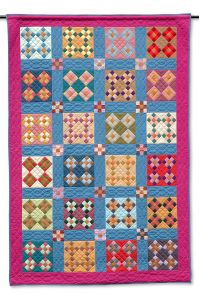
Debby Mosher guest posts for us today. Debby lives in Lawrence, Kansas, and served as a co-leader in one of our Boundaries groups. She works at Allen Press as an assistant managing editor and she exhibits her creative flair as a flautist, a sign language interpreter, a mother and a grandmother. Debby is also an avid quilter.quilt

As I passed around patterns, materials, batting, and then quilts – I wanted to illustrate the Boundaries lesson “How to Measure Success in Boundaries.”

Our success is the walking through of our boundaries to see that they are good and fruitful.

We are all made of wonderful materials with which God created us. These materials are illustrated through colors and accents, blending and contrast, shapes, sizes, sewing, cutting, tearing, piecing and quilting.

Throughout our lives we ALL have troubles; we are often cut and torn, then pieced back together; sometimes poorly and other times well.

Yet throughout our lives, we may purposefully allow ourselves through our choices and boundaries (or lack thereof) to be torn apart again and again.

But we will eventually be pieced back together through our good choices and godly and healthy boundaries. Then we become fully well and full of grace.

Batting is added for softness and backing for strength (as in the Trinity or the biblical three cords – top, batting, backing).

We then allow the divine Quilt Maker to strike through all three layers again and again and again. He quilts all three layers into our own special and loved, beautiful and strong, selves.

Our choices and boundaries, good and bad, have then become a real part of our true beauty.

Finally, our layers are bound together all the way around (with the essence of God’s love – His seal and the Holy Spirit of God). Nothing else can get in. We are then His creation and our true selves at the same time.

Life will help you become the real you through all your choices and boundaries – thanks to the original Quilt Maker.

2013 GateWay of Hope – The Helping Place for Hurting Women

Design a site like this with WordPress.com
Get started